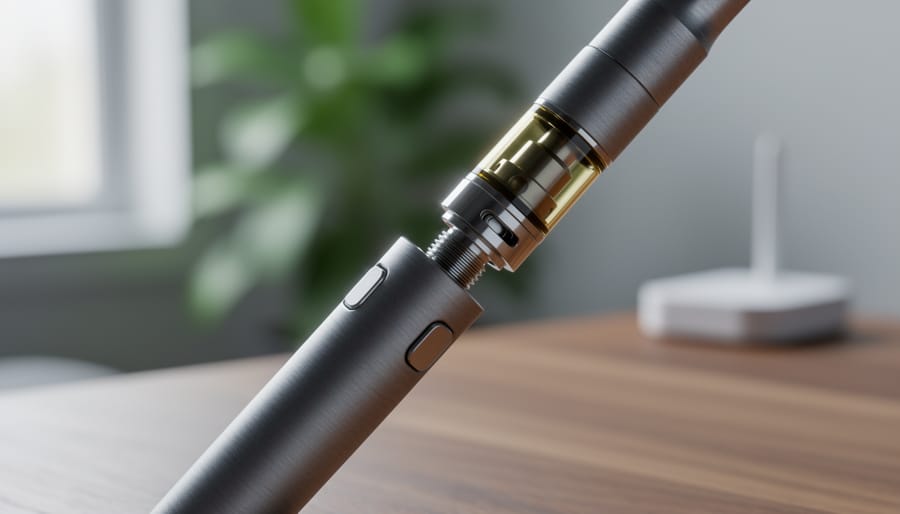
What Is a 510 Thread Battery and Why Does It Matter for Your Vaping Experience?
If you’re transitioning from smoking to vaping, you’ve probably encountered the term “510 thread battery” and wondered what makes it so universal in the vaping world. Here’s what you need to know: this standardized threading system has become the backbone of modern vaping, connecting your battery to virtually any compatible cartridge or tank on the market.
The name itself comes from the original design specs. 10 threads at 5mm diameter. Simple as that.
Think of it like USB ports for your phone or laptop. Before standardization, every vaping device used different connections, creating frustration and limiting your options. The 510 thread changed everything by creating a universal system that works across brands and styles.
Sarah Martinez, a former pack-a-day smoker, remembers her confusion when first exploring vaping options. “I was overwhelmed by all the different devices and parts,” she recalls. “Learning that most cartridges use 510 threading made everything click. I could finally understand what I was buying and why these pieces fit together.”
Whether you’re using oils, concentrates, or dry herb attachments, the 510 connection remains consistent. This standardization gives you freedom to mix and match components based on your preferences rather than being locked into proprietary systems.
Understanding this threading system isn’t just technical knowledge. It’s your gateway to making informed choices about the devices that support your smoke-free journey.
Understanding the 510 Thread Battery: The Universal Connection in Vaping
If you’ve recently started exploring vaping as an alternative to smoking, you’ve probably encountered the term “510 thread battery” and wondered what makes it so special. Simply put, this small device is the power source that brings your vape cartridge to life, and understanding how it works will help you make informed choices about your vaping experience.
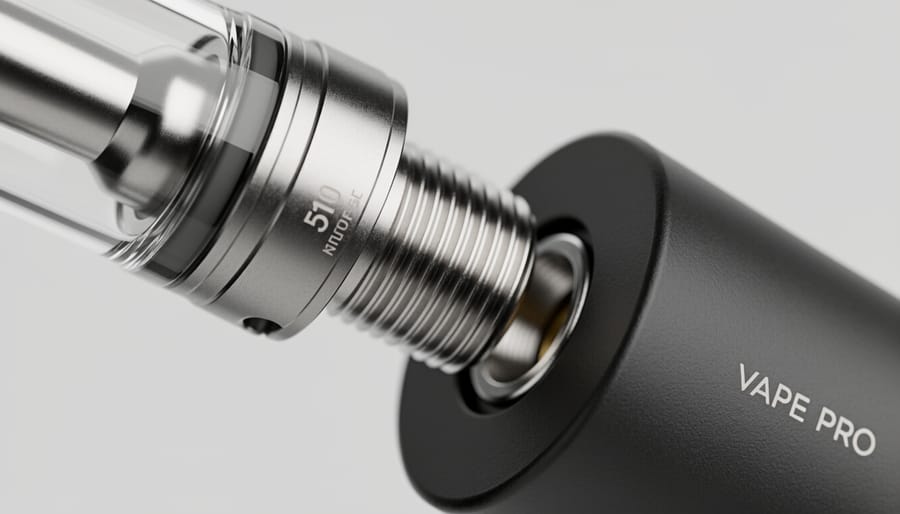
The name itself tells an interesting story. “510” refers to the specific threading design: 5 millimeters in length with 10 screw threads. This standardized connection was originally developed by Joyetech, one of the early innovators in vaping technology. What started as one company’s design quickly became the universal standard because it worked so well. Today, the vast majority of vape cartridges and batteries use this exact threading, which means you’re not locked into one brand or system.
Here’s how it works in practice. The battery houses rechargeable cells (typically lithium-ion) that provide electrical power. When you attach a cartridge to the top of the battery, those 10 threads create both a physical connection and an electrical pathway. Once activated, the battery sends power to a heating element inside the cartridge, which vaporizes the contents for you to inhale. Some batteries activate when you press a button, while others respond automatically when you draw on the mouthpiece.
“I remember feeling completely overwhelmed when I first switched from cigarettes,” shares Michael, a former pack-a-day smoker who transitioned to vaping two years ago. “But once someone explained that 510 thread batteries are like the universal charger of vaping, everything clicked. I could try different cartridges without buying a whole new setup each time.”
This universality became the key to the 510 thread’s dominance. Before standardization, every manufacturer used proprietary connections, forcing users to stay within one ecosystem. The 510 thread changed that landscape entirely. Now you have real flexibility when choosing vape cartridges knowing that almost any cartridge will fit your battery.
The basic anatomy is straightforward: a battery body containing the power cells, the threaded 510 connection at the top, a charging port (usually USB), and often an indicator light. Some models include additional features like variable voltage settings, but the core purpose remains the same: delivering consistent power to your cartridge safely and reliably.
How 510 Thread Batteries Work: The Power Behind Your Vapor
Understanding how your 510 thread battery works doesn’t require an engineering degree. Think of it as a simple three-step dance between components that transforms oil into vapor.
When you screw a cartridge onto your battery, the threaded connection does more than hold things together. Those 510 threads create an electrical pathway. At the base of your cartridge sits a small metal contact point. When it touches the corresponding contact on your battery, you’ve completed the circuit. Press the button (or simply inhale on draw-activated models), and electricity flows from the battery into the cartridge.
Here’s where the magic happens. Inside your cartridge, there’s a tiny heating element called a coil, usually made from ceramic or metal. The electrical current heats this coil rapidly, often reaching temperatures between 400-500°F. This heat transfers to the oil or e-liquid surrounding the coil, turning it into the vapor you inhale. No combustion, no smoke. Just vaporization.
Two specifications matter most for your experience: voltage and battery capacity. Voltage determines how hot your coil gets. Most 510 batteries operate between 3.3 and 4.8 volts. Lower voltages produce smoother, more flavorful vapor. Higher voltages create bigger clouds but can sometimes taste harsh or burn your oil if you go too high. Some batteries offer variable voltage settings, letting you find your sweet spot.
Battery capacity, measured in milliampere-hours (mAh), tells you how long your device runs between charges. A 350mAh battery might last a moderate user one full day. A 650mAh battery could stretch to two days or more. Think of mAh like the size of your gas tank.
Sarah, a former smoker who switched to vaping last year, puts it simply: “Once I understood that lower voltage meant better flavor, everything clicked. I stopped burning through cartridges and actually started enjoying the experience.” That’s the beauty of these batteries. Master the basics, and you’re in control of your vaping experience.
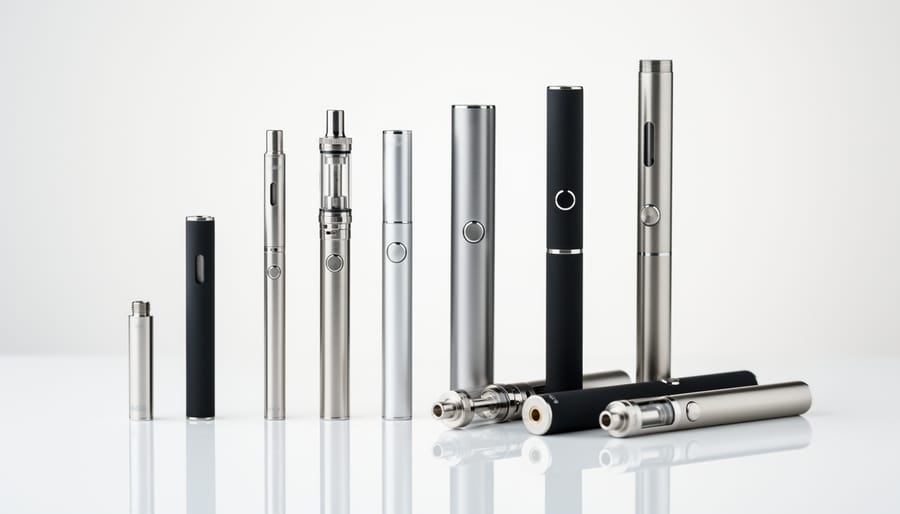
Types of 510 Thread Batteries: Finding Your Perfect Match
Button-Activated vs. Draw-Activated Batteries
When you’re exploring options in vaping for beginners understanding how your battery activates makes a real difference in your daily experience. 510 thread batteries come in two main varieties: button-activated and draw-activated models.
Button-activated batteries require you to press a button while inhaling. This gives you precise control over heating time and vapor production. You can pre-heat your oil or pulse the button for smaller puffs. Many experienced users prefer this control, though it means one extra step each time you vape.
Draw-activated batteries work automatically. Simply inhale and the battery detects airflow, firing instantly. No buttons, no learning curve. Sarah, a former smoker who switched to vaping last year, told us she initially felt overwhelmed by all the options. “The draw-activated battery felt familiar, like my old cigarettes. I didn’t have to think about it.”
For newcomers making the transition from smoking, draw-activated devices typically offer the smoothest introduction. They eliminate decision fatigue and feel intuitive. Button-activated models suit those wanting more customization or who’ve grown comfortable with the basics. Neither option is superior across the board. Your choice depends on whether you value simplicity or control more in your daily routine.
Variable Voltage Options for Customization
If you’re someone who appreciates having control over your vaping experience, variable voltage batteries might be exactly what you need. These devices let you adjust the power output, typically ranging from 3.2 to 4.8 volts, giving you direct influence over how your vape performs.
Think of it like adjusting the burner on your stove. Lower voltage settings produce cooler vapor with more pronounced flavor notes, perfect for tasting the subtle differences between cannabis strains or e-liquid profiles. Higher settings generate warmer, denser clouds and deliver a stronger throat hit that many former smokers find satisfying.
Marcus, a two-pack-a-day smoker who switched to vaping three years ago, told us: “I started with a basic battery, but upgrading to variable voltage changed everything. Mornings, I keep it low for smooth flavor. After dinner, I bump it up for that satisfying hit I used to get from cigarettes.”
Who benefits most? Experienced vapers who’ve moved beyond the basics, flavor enthusiasts experimenting with different concentrates, and anyone who wants their device to adapt to different situations. Dr. Elena Rodriguez, a vaping technology consultant, explains: “Variable voltage empowers users to optimize their experience based on the specific cartridge they’re using, since different oils and coil resistances perform best at different power levels.”
Form Factors: Pen-Style, Box Mods, and Discreet Options
When you’re choosing a 510 thread battery, the physical design matters more than you might think. Your choice affects everything from how easily you can slip it into your pocket to how long it lasts between charges.
Pen-style batteries are the most popular starting point for people transitioning from traditional cigarettes. They’re slim, lightweight, and feel familiar in your hand. Sarah, a former pack-a-day smoker from Portland, told us she chose a pen-style battery specifically because “it didn’t feel like I was holding some futuristic gadget.” These batteries typically range from 280mAh to 650mAh capacity, which means lighter models need charging more frequently. But that trade-off works for many users who value discretion and simplicity.
Box mods represent the other end of the spectrum. These rectangular devices house larger batteries, sometimes exceeding 3000mAh, which can last several days for moderate users. They’re bulkier and more noticeable, but the extended battery life and additional features like variable voltage settings appeal to those who want more control over their experience. Dr. Michael Chen, a vaping technology researcher, notes that “box mods give users the ability to customize their experience in ways that weren’t possible five years ago.”
Discreet options have exploded in popularity recently. These ultra-compact batteries often look like USB drives or car key fobs. They sacrifice some battery capacity for ultimate portability, making them ideal for people who need maximum discretion in public settings. Battery life typically ranges from 200mAh to 400mAh, meaning daily charging becomes part of your routine.
Key Features to Look for When Choosing a 510 Battery
Shopping for your first 510 battery can feel overwhelming with so many options on the market. But understanding a few key specifications will make the decision much clearer and help you find a device that truly fits your lifestyle.
Battery capacity is probably the most practical feature to consider. Measured in milliampere-hours (mAh), this number tells you how long your battery will last between charges. A 350mAh battery might last a moderate user through the day, while a 650mAh or higher capacity battery offers more runtime. Sarah Chen, who switched from smoking to vaping two years ago, shares her experience: “I started with a small 280mAh pen because I liked how discreet it was. But I found myself charging it twice a day, which got annoying fast. When I upgraded to a 510mAh battery, everything changed. One morning charge got me through my entire workday and evening.”
Here are the essential features you should evaluate:
- Battery capacity (mAh): Higher numbers mean longer usage between charges, typically ranging from 280mAh to 1000mAh or more
- Charging method: USB-C charges faster and more reliably than older micro-USB ports
- Safety protections: Look for overcharge protection, short-circuit prevention, and automatic shutoff features
- Preheat function: Gently warms oil for smoother draws, especially useful in cold weather or with thicker concentrates
- Build quality: Metal bodies last longer than plastic; check customer reviews for durability reports
Voltage control is another feature that separates basic batteries from more advanced options. Fixed-voltage batteries work fine for beginners, but adjustable voltage (typically 2.4V to 4.0V) lets you customize your experience. Lower voltages produce cooler, more flavorful vapor, while higher settings create warmer, denser clouds.
Dr. Michael Torres, a vaping technology consultant, emphasizes the importance of proper certifications: “Any 510 battery you consider should have safety certifications. These aren’t just stickers. They mean the device has been tested for electrical safety, battery stability, and proper functioning of protection circuits. It’s the difference between a reliable device and a potential safety concern.”
Button versus draw-activated operation also matters. Button-activated batteries give you control over when vapor is produced and are generally more reliable. Draw-activated batteries are simpler to use but can occasionally misfire in your pocket or purse.
Finally, consider the physical design. Does it fit comfortably in your hand? Will it slip easily into your pocket or bag? Some batteries have rubberized grips that prevent slipping, while others prioritize a sleek, slim profile. Think about your daily routine and choose accordingly. The best battery is the one you’ll actually enjoy using day after day.
Real User Experience: Making the Switch with a 510 Battery
When Marcus picked up his first 510 thread battery two years ago, he’d been smoking for fifteen years. “I wasn’t convinced vaping would work for me,” he admits. “I’d tried patches, gum, even those disposable e-cigarettes. Nothing stuck.” His skepticism ran deep, fueled by failed quit attempts and a general distrust of anything that seemed too easy.
The turning point came during a routine checkup when his doctor expressed concern about his persistent cough. Marcus decided to give vaping one genuine try, this time doing his research. He chose a simple 510 battery starter kit based on a friend’s recommendation.
The first week challenged him. “I kept reaching for cigarettes out of habit,” he recalls. “The vaping experience felt different. I had to find the right nicotine strength and figure out how to use the button properly without burning the oil.” He experimented with draw techniques and learned that slow, steady inhales worked better than quick puffs.
What surprised him most was the flexibility. Unlike disposables that died mid-use, his 510 battery recharged in under an hour. He could swap cartridges to try different flavors and nicotine levels until he found what satisfied his cravings. “Having that control made all the difference,” Marcus explains.
Three months in, he stopped buying cigarettes entirely. His morning cough disappeared. Friends commented on how much better he smelled. “The 510 system gave me something my hands could hold and a ritual that felt familiar enough to replace smoking,” he says. “It wasn’t an overnight miracle, but it worked because I could customize everything to fit my needs.”
Today, Marcus carries his battery everywhere, a small reminder of how far he’s come.
Maintenance and Care: Extending Your Battery’s Life
Taking care of your 510 thread battery doesn’t require much effort, but the small steps you take can dramatically extend its lifespan and keep your vaping experience consistent. Think of it like maintaining any electronic device you rely on daily.
Marcus, a former smoker who transitioned to vaping three years ago, learned this lesson the hard way. “I went through two batteries in my first six months because I didn’t know better,” he shares. “Once I started following a simple maintenance routine, my third battery lasted over two years.”
Here’s a straightforward approach to keeping your battery in top shape:
- Wipe down the threading weekly with a cotton swab lightly dampened with isopropyl alcohol to remove residue buildup.
- Check the connection point for any visible debris or oil before each cartridge change.
- Charge your battery before it completely dies, ideally when it reaches 20-30% capacity.
- Unplug the charger once the battery reaches full capacity to prevent overcharging stress.
- Store your battery upright in a cool, dry place away from direct sunlight.
Cleaning your battery regularly prevents the most common issue vapers face: poor connection between the battery and cartridge. If you notice weak vapor production or inconsistent hits, the threading likely needs attention. A quick clean often solves the problem immediately.
Dr. Sarah Chen, a vape technology consultant, emphasizes the importance of following proper battery storage practices. “Extreme temperatures are lithium-ion batteries’ biggest enemy,” she explains. “Never leave your battery in a hot car or freezing garage. Room temperature storage preserves both performance and safety.”
If your battery won’t turn on after charging, try the classic five-click reset. Many users forget this simple troubleshooting step. Connection problems often stem from over-tightening cartridges, which can push down the center pin. Gently pull it up with a toothpick if needed.
The charging cable matters too. Always use the cable that came with your battery or one specifically designed for it. Generic phone chargers might fit but can deliver incorrect voltage, shortening your battery’s life or creating safety risks.
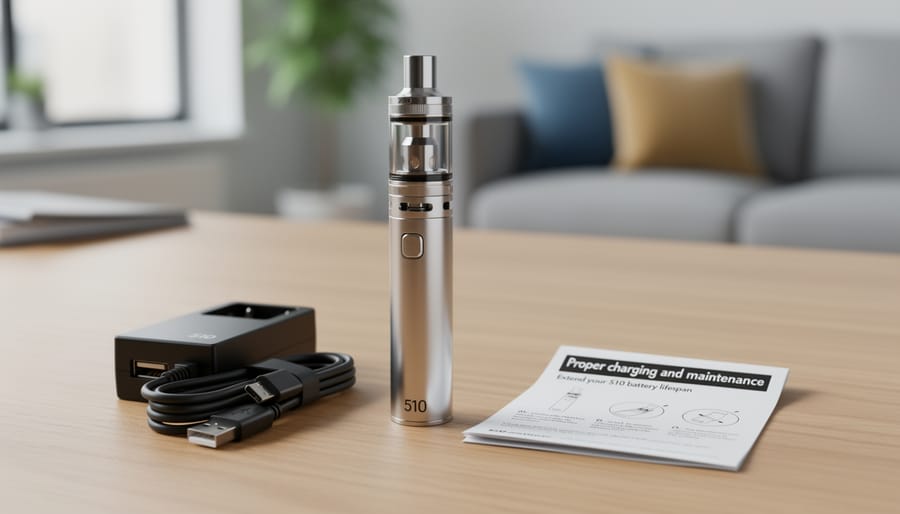
Safety Considerations Every Vaper Should Know
Understanding proper battery safety practices isn’t about creating worry. It’s about giving you the knowledge to vape confidently and responsibly.
First, let’s talk about battery basics. Your 510 thread battery contains lithium-ion cells that need respect but not fear. Never leave batteries charging overnight or unattended. Use only the charger designed for your specific device, as voltage mismatches can cause problems. If your battery feels unusually hot during use or charging, disconnect it immediately and let it cool down.
Marcus, a vape shop owner in Portland, shares a simple rule: “If the battery has any visible damage, dents, or tears in the wrapper, don’t use it. I’ve seen people try to push their luck, and it’s never worth the risk.”
Counterfeit batteries are unfortunately common in the vaping market. Purchase from reputable retailers who stand behind their products. Check for authentication codes on packaging and verify them with the manufacturer. If the price seems too good to be true, that’s usually your answer.
Battery ratings matter too. Pay attention to amp limits and capacity ratings printed on your device. These numbers tell you what your battery can safely handle. Using cartridges that exceed your battery’s specifications creates unnecessary stress on the device.
Replace your battery when you notice these signs: significantly reduced battery life between charges, longer charging times than usual, or the battery getting warmer than normal during regular use. Most 510 batteries last 6-12 months with regular use.
Dr. Sarah Chen, a battery technology researcher, reminds us: “These devices are designed with multiple safety features built in. Following basic guidelines means you’re adding your own layer of protection to an already safe system.”
Store batteries at room temperature, away from direct sunlight and moisture. Simple habits create lasting safety.
Common Questions About 510 Thread Batteries
Are all 510 thread batteries compatible with every cartridge?
Most 510 thread batteries work with the majority of cartridges, but variations in thread length and connection quality can occasionally cause issues. Checking that both your battery and cartridge meet standard 510 specifications ensures the best fit.
How long does a 510 thread battery typically last?
Battery lifespan depends on capacity and usage habits. A 350mAh battery might last a moderate user one to two days, while a 900mAh battery can provide three to five days between charges. With proper care, the battery itself should function for six months to two years.
How long does it take to charge a 510 thread battery?
Most 510 batteries fully charge in one to three hours depending on capacity. Smaller batteries around 350mAh charge faster, while larger 1000mAh+ batteries need more time.
Why won’t my battery and cartridge connect properly?
Connection issues usually stem from a dirty contact point or overtightening. Gently clean both the battery and cartridge threads with a cotton swab, then reconnect without forcing the cartridge too tight.
Can I use a 510 battery while it’s charging?
Some batteries support pass-through charging, but many don’t. Check your specific model’s manual, as using an incompatible battery while charging can damage the device or create safety risks.
Marcus, a former smoker who switched to vaping eight months ago, shared something valuable during our recent conversation. “I spent my first two weeks worried I’d bought the wrong battery because everyone online seemed to have different answers,” he said. “Turns out, I just needed to clean the connection and stop screwing the cartridge on like I was tightening a bolt.”
His experience reflects what many beginners face. You’ll find conflicting information online partly because battery quality varies between manufacturers. A reputable battery from an established brand will perform consistently, while cheaper alternatives might have looser tolerances that affect performance.
Dr. Sarah Chen, a vaping technology consultant, emphasizes starting simple. “New vapers should focus on three basics: keeping connections clean, not overcharging, and storing batteries at room temperature. These habits solve 90% of the problems people encounter.”
Budget concerns come up frequently too. Entry-level 510 batteries start around ten to fifteen dollars, with premium options reaching thirty to fifty dollars. The price difference reflects build quality, battery capacity, and features like variable voltage. Starting with a mid-range option around twenty dollars gives you reliability without overspending before you know your preferences.
If your battery blinks repeatedly, it’s communicating something specific. Three blinks usually indicate a connection problem, five blinks often signal a short circuit or incompatible cartridge, and ten blinks typically mean the battery needs charging. Consult your specific model’s instructions, as patterns vary between manufacturers.
If you’re a smoker considering the switch to vaping, the 510 thread battery offers one of the friendliest entry points you’ll find. There’s real comfort in knowing that millions of people have started exactly where you are now, using this same simple system to take their first steps toward a smoke-free life.
The beauty of the 510 thread standard lies in its straightforwardness. You don’t need to be tech-savvy or understand complex specifications. The universal connection means you can try different cartridges and find what works for you without buying entirely new devices. That flexibility removes the pressure of making a “perfect” first choice.
Take it from Maria, a 15-year smoker who made the transition two years ago: “I was intimidated at first, but once I understood the basics of my 510 battery, everything clicked. Being able to swap cartridges meant I could experiment with flavors and strengths until I found my sweet spot. That freedom made all the difference.”
Understanding your device puts you in control. You’ll recognize when your battery needs charging, know which voltage setting suits your preferences, and troubleshoot minor issues without panic. This knowledge builds confidence that carries through your entire vaping journey.
The 510 thread system has proven itself reliable over years of use. You’re not gambling on experimental technology. You’re choosing a tested, accessible option that respects both your wallet and your learning curve. Starting here gives you room to grow at your own pace while discovering what works best for your transition away from smoking.